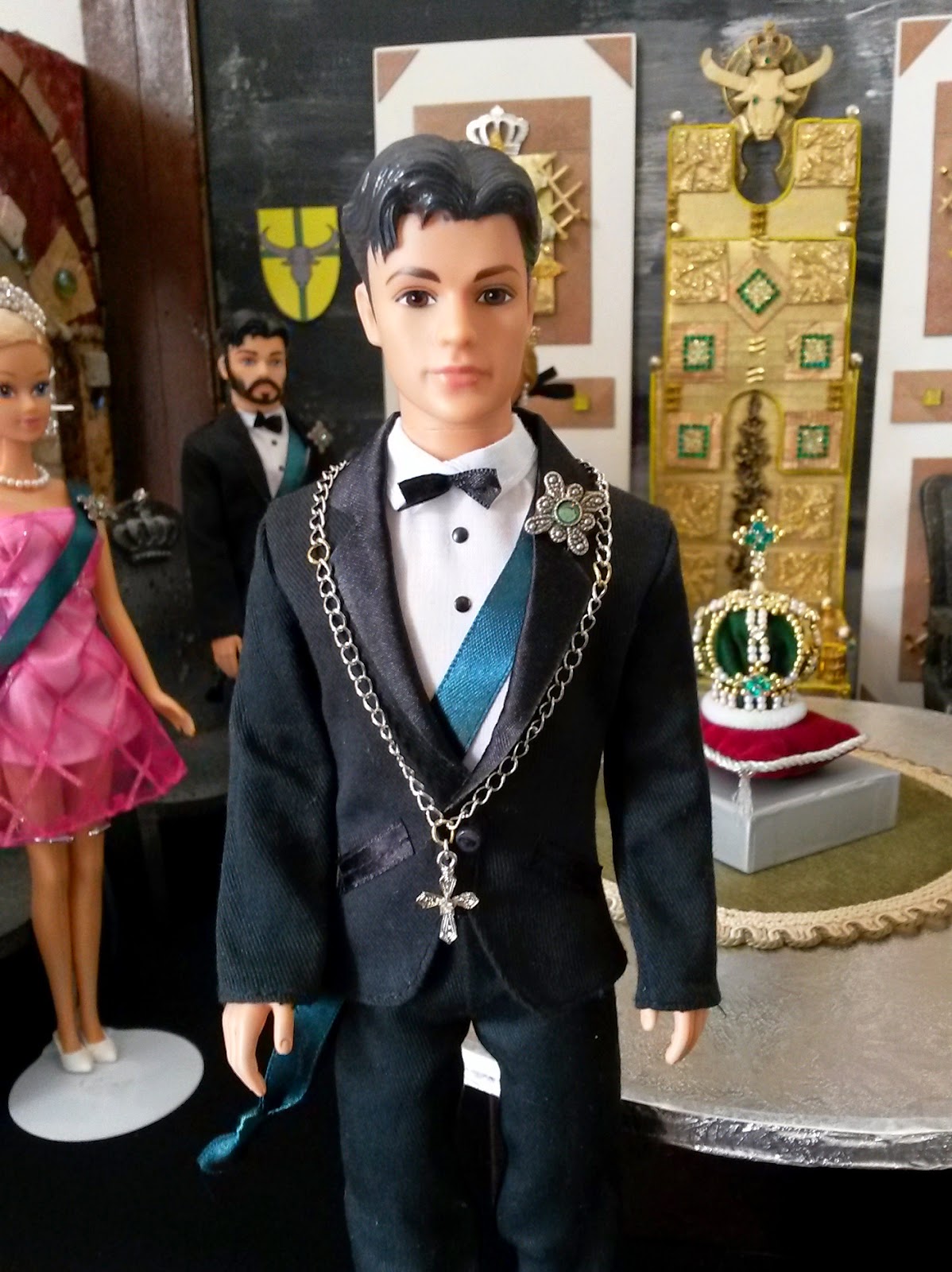
Emperor Christian Victor I

Emperor Christian Victor I
Showing posts with label Von Thurn und Taxis. Show all posts

Saturday, 28 March 2015

Wonderful Weekends (Range of Official Portraits)

Sometimes we overlook some of the many photos we have taken of Royals. Today we will feature some of those official portraits we neglected to post  over the last year.

Infanta Isabella, the Duchess of Toledo is the sister of the Queen of Hispania and does not often see the limelight. She did however release and official portrait late in 2014. Being a very informal Royal she did not even opt for a Royal crest to be included in the portrait and sported minimal jewellery albeit the historic tiara inherited from her mother. 


Princess Victoria Von Thurn und Taxis, Electress of Syldavia has never released official portraits until this week actually. We thought to include them in this feature. 

The Margravine of Montrose is an elusive yet high ranking Noble from the Kingdom of Normandia. She avoids the media but did release this official portrait in 2014. It features her wearing family jewels and displaying the Montrose Coronet on the pedestal next to her. 

The Princess of Wallachia released this photo for a feature on the historic jewels of the Draculesti Family. It was never used but we thought to at least feature it here today.

Wednesday, 11 February 2015

What's Up Wednesday (2015 Syldavian Electorate Meeting)

The recently restored throne room of Ploch Palace in Syldavia could finally be put to official use for the first time since the restoration of the monarchy. Reichenthal craftsmen took several years to restore the neglected splendour of the very intricately decorated room to its former glory. The central feature of the room is obviously the throne presiding over a silver overlaid round table seen below.


The throne room served in its first Syldavian Electorate meeting this year, albeit it the third meeting of its kind in the history of the newly reestablished monarchy. From this year onward the room and the annual Electorate Meeting will be seen as the very heart of the Kingdom of Syldavia.

In the above picture we see the Crown of Syldavia, symbol of the monarchy present upon the round table.

The yearly Electorate Meeting gathers the Heads of the Five Noble Families in one room to officially open the national year and establish its plans and budgets and also to vote in and officiate policy. The meeting is very similar to an "Opening of Parliament" as in other monarchies except that in Syldavia, the King is seen as part of the 5-fold collective and not as an individual acting solely in his own person.
Their Majesties the King and Queen of Syldavia and the Count Von Bismarck represent the currently elected Royal Family.

The monarch of Syldavia is elected from the heads of 5 electorate families. He/she then serves for life followed by another election. Above we see the other four Electors along with the Royal Family gathered in the throne room.

King Nikolas III of Syldavia.

Queen Maxima was present as an observer...

along with the King's brother who officially represents the Von Bismarck Family.

The Countess of Bo'hemia more popularly known as the famous fashion designer, Madame Frumsetta, is one of the Electors.

The Grand Duke of Reichenthal, formerly King of Reichenthal, represents his now mediatized region of Reichenthal as an Elector.

The Grand Duke of Serbieski, another former Kingdom  is the fourth Elector at the council..

Finally we get a rare glimpse of a Royal who does not frequent the lime light. Princess Victoria Von Thurn und Taxis, the last Elector.

Even though the Electorate Meeting is an official and working meeting it also serves a ceremonial function requiring formal dress and tiaras. We hope at least the sparkle makes this seemingly mundane event more fun to watch.

Tuesday, 19 August 2014

Tiaras and Trinkets on Tuesday (The Reichenthal Vault Cache of Royal Jewels)

The Reichenthal discovery of historic treasures walled up in a secret room has been the talk now in the news media for the last two months. Today's post will feature a list of all the historic jewellery pieces found hidden, probably to save it from destruction, amongst other artifacts. Princess Augusta, the world renowned historic jewellery dealer, was tasked with the massive responsibility of documenting, appraising and verifying the provenance and by extention, the ownership of the jewellery pieces found in the Reichenthal secret vault.

Here we see the Princess as she was photographed, still inside the vault with the large chests containing only the Royal jewellery left there for posterity. 

One of the chests was found inside the vault left open with jewellery and gold bullion spilling from it as if it was hastily dropped there many decades ago. 

Let us now run down the list of every single piece of jewellery for documentation sake and to appreciate the new archive photos taken of these exceptional pieces of history.

As seen in the photo of the open chest, this open circlet crown is now known to belong to the Crown Jewel Collection of Reichenthal. It has been documented in historic paintings and photographs but hasn't been seen for almost 20 years since the 1996 Revolution. It is known as the Queen Consort Crown of Reichenthal and was made from gold and amethysts in the early 1500's

This solid gold diadem set with diamonds and an amethyst was made to resemble the style of the Queen Consort of Reichenthal's Crown in 1888 for the then wife of the Crown Prince. Today it would be appropriate for the Crown Princess Delrese to wear it. 

Two Reichenthal style gold tiaras are confirmed to not be part of a documented list of the Reichenthal Crown jewels but are presumed to be from the collection of the controversial Germanic Imperial Family. Two tiaras are vaguely described in a list of " possesions"  of the Empress to have been sent out of the country during the Great War only to dissappear forever but there is no archival evidence otherwise. The description matches these but is not conclusive proof. As such they belong to the current Syldavian State and will probably end up in the National History Museum. 

This platinum and diamond tiara of very fine craftmanship has also failed to produce verifiable provenance. 

This art deco style tiara of exceptional craftsmanship is made from gold and set with rubies and diamonds. No documentation or other historicity for it has come to light and it too may find its home in a museum. 

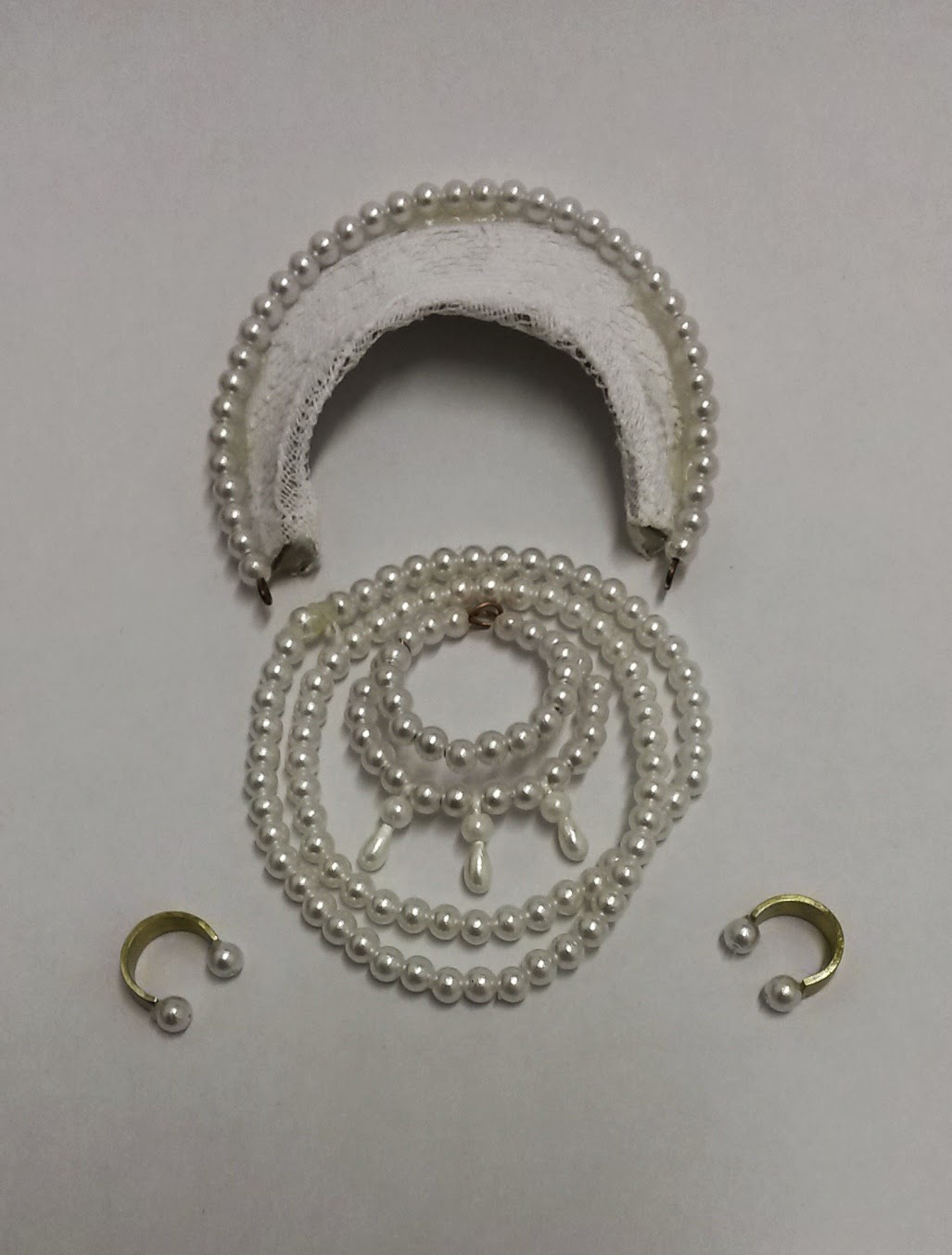
A set of period jewellery of exceptional historic and regional significance is this parure of pearls. The very obvious Ruskian design made it easy to identify from contemporary documentation as belonging to the Imperial Family of Ruskiana. It will be returned to Grand Duchess Xenia, the pretender to the Ruskian throne on behalf of and in trust of the people of Ruskiana. We hope that the government of Ruskiana will allow us to see these worn and not to just let them languish in a museum as seems to be the fate of some of the other pieces in our list. 

The Champagne State Diadem was a shock to find amongst the many pieces in the Reichenthal Vault. The reason being that history has presumed this particular piece to have been destroyed along with many other jewels in the Franconian Revolution more than 200 years ago. We will discuss the mystery along with another piece of Franconian Crown Jewels also found in the vault a little further down the list. 

Steel, diamonds and rubies make up this very unusual but elaborately designed diadem. The choice of steel is what identified this tiara as only one such example was ever made and was in itself a very unique choice of material for a ladies tiara. The Consort's Diadem of Fulco D'Este was also presumed lost in the Great War. Along with the Steel Crown of Fulco D' Este it was made from steel taken from a canon that is said to have tipped the war of independence in the favour of the Royalists. The Crown and now reunited with its matching Consort's Diadem is considered more of a symbol of the nations independence than of the monarchy per se'.  
The solid gold Consort's Diadem of  the Noble House Von Thurn und Taxis had some documents connecting it to its history and owners with it in the chest. This was a very valuable find as no records or memory of its existence was known historically. We can thus assume that it was made in Reichenthal and due to unforeseen circumstances was never sent to those who ordered it, presumably due to the 1996 Revolution. 

The grandest and most historic piece of the Franconian Crown Jewels has also come to light alongside the aforementioned Champagne Diadem. These miraculous finds pose some serious challenges to the continuity of Franconian history as far as the final end of their Royal jewels are concerned. It was long held that almost everything was either deliberately melted down and sold or was lost to looting. however these two spectacular finds prove that assumption false. How they stayed hidden for two centuries and ended up in Reichenthal adds to the mystery. It seems far more research may be required but for now it will remain an enigma. the jewellery at least was so famous in their time that they are easily identified and may return to the legal descendants of their former owners. 

The medieval Crown of Cataljone once graced the head of the independant Prince of Cataljone until the Principality eventually fell to its powerful neighbour, Hispania, in 1589. The Crown since then was used as the symbol for the heir to the Hispanian throne along with the title Prince of Cataljone. The Crown was thought lost during the 1996 Revolution but records now prove that it was in Reichenthal for routine maintenance and repair and obviously was spared for the same reason as every other treasure relegated to the secret vault. 

Another historic artifact from Hispania is the Sword of the Lionheart which was with the Crown of Cataljone in the same chest. This is the official coronation sword of Hispania and the people of Hispania are said to be elated due to its recovery. 

The Nuptial Coronet of Scotney is a very sentimental and historic piece of jewellery as it has been used for over 100 years in the marriage ceremonies of all Scotney Princesses. It to was in Reichenthal for routine maintenance at the time of the 96 revolution and found its way into the vault. It seems the foresight of the then King of Reichenthal and his jewellers are to be commended. 

The most intrinsically valuable yet not the most historically old piece of jewellery is still a national symbol and had Princess Augusta aghast when she opened the chest. The Crown of the former Kingdom Romagna was according to tradition smuggled out of the country during the Great War. It was originally made to replace the old medieval crown that was destroyed in a fire in the Royal palace in 1802. The Crown according to the smuggling rumour plainly went missing and was never seen again until now. Perhaps the Reichenthal rulers had an unspoken agreement with most Royal families to do whatever they could in time of need to save historic pieces whenever possible. This Crown will return to Romagna and fall in the custody of Princess Donatella, Duchess DiGiorgio, as keeper of Royal treasures on behalf of that nation. 

The greatest find and also most politically volatile set of jewellery is also the oldest set of Crown Jewels in Europa. Historically, the set was created to symbolize Serbieski independence after centuries of war and since then has also caused wars. Over time it has reached a status of veritable holy relic in the eyes of the people who's identity and independence it symbolizes. Made in 1250 the Crown Jewels of Serbieski is an awesome find for its historic value but politically pose a conundrum. Their return to Serbieski has the potential to incite civil unrest and an emergency meeting of the government of Syldavia that rules over the now province of Serbieski has been called. The Grand Duke of Serbieski is the legal owner of the jewels placing him under severe pressure as he is asked to not bring the Crown jewels back to their homeland until consensus is reached as to their fate. Internet chat sites are reporting massive feeds of information surrounding the discovery of the jewels predominantly calling for their return and public display on Serbieski soil. Armed forces in Syldavia have been put on "discreet" alert and governments in greater Europa have called for calm and reason to permeate the Serbieski stance.

We conclude today's post with The Duke of  Swann's statement to the press in connection with Serbieski Crown jewels:
" We hope that the joy of finding this huge treasure will foster an overriding attitude of thanksgiving in the whole of Europa and Serbieski in particular. May it usher in a new era of hope for a prosperous future set on a foundation of unity. If Reichenthal could risk the necessary sacrifices to preserve these treasures from the destruction of war, let us honour that sentiment by preserving them and our futures with the same self sacrifice."  

Monday, 30 September 2013

Tiaras and Trinkets on Tuesday (The Crown Jewels of the Noble Electorate of Syldavia)

The Kingdom of Syldavia is an elected monarchy where each King is elected, upon the death of the former monarch, from the 5 candidate heads of the Noble Houses of Syldavia. These former Royal Dynasties ruled their respective regions independently or semi-independently in the past but have now unified into the elected monarchy of Greater Syldavia. As such these regions sported their own Crown Jewels at times in history and some of these collections still exist today. They are however in principal technically redundant as the country only legally accepts the Crown of Syldavia as a national symbol. The archaic symbols may be applied in their respective regions as historic reference or familial symbols related to the Noble Houses but never in the context of a national symbol.

Please remember that these jewellery collections are wholly separate from the Crown Jewels of the Kingdom of Syldavia that serve as the Regalia and Symbols of the entire country as a whole. For more on that follow the link below.
http://daniel-s-world.blogspot.com/2012/04/tiaras-and-trinkets-on-tuesday_16.html

Let's take a look at the 5 Collections of remaining regional historic regalia. 

The Counts Von Bismarck

As a standard rule, a Comital Coronet would be appropriate for the Count Von Bismarck as a crown related to the region. It is known that during the Syldav Empire the Counts did own such a coronet but it seems to have been entirely lost to history after the war. No depiction exists of the original coronet but it would have adhered to  the basic rules of a Counts Coronet which is a basic circlet band that surrounds the head with between 8 and 16 short pinnacles surmounted by small spheres. 

There is however one piece of the "regalia" that has survived the Great War and still resides in the private ownership of the current Von Bismarck Family Head, Count Nikolas Von Bismarck who is also the current elected King Nikolas III of Syldavia. This parure of diamonds is known to date from the Imperial Germanic era based on its huge design. It is known as the Von Bismarck Nuptial Parure and may only be worn by the wife of the Count Von Bismarck. As such it serves as the signature diadem of the Countess Von Bismarck much like a Queen's Crown would serve a Queen. 

The Grand Dukes of Serbieski

The Crown Jewels of Serbieski was already a very ancient establishment by the time of its establishment as an independent monarchy. The Crown and Scepter was originally made for Krull Danielovich I in circa 1250. By the time of the Grand Duchy these ancient relics, considered to be a mere princely coronet and jewelled mace in configuration, were highly revered and no gaudy "new" crown was going to ever surpass them in importance. They were duly used at the investiture of the Grand Duke of the independent Serbieski. However by the time Serbieski became a Kingdom after the Great War, the Crown was lost and the King was only invested not crowned. 

The Tiara and Necklace in this photo forms part of the Crown Jewels of Serbieski. They were both made for the first " Queen" of Serbieski when the Grand Duchy was briefly elevated to the level of a Kingdom after the Great War. They remain today as part of the Grand Duke's private collection and is often worn by his wife to State Events. 

The Princes Von Thurn und Taxis

The Noble Princes of Thurn und Taxis have officially never ruled their own realm but have held sway over a region within the traditional Greater Syldavia for centuries. The family were created Princes Von Thurn und Taxis during the High Renaissance and as such has since owned the appropriate Princely Coronet which remains with the Family to this day.

The Von Thurn und Taxis Princely Coronet is made of Gold and Silver and set with Diamonds. 

The Grand Dukes of Reichenthal and Kings of the Reichenthalians

The House of Joshuwha, traditional "Kings" of the people of Reichenthal and current Grand Dukes were spared many of the losses of the Great War and 1996 Revolution. Thus they retain the most complete set of tradition Crown Regalia, inclusive of the arched Crown of the Kings of Reichenthal.

The Crown Jewels of Reichenthal is the most complete, most historic and most impressive when compared to the other in Syldavia and even compared to the Crown Jewels itself. The arched Crown of the King of Reichenthal rival any other in Europa and is a testament of the world famous Reichenthalian craftsmanship. 

The Consort Queen's Diadem compliments the Crown in design and craftsmanship. Both are of late 17th Century design and manufacture and include spectacular gemstones. 

The Princely Counts of Bo'hemia

Similarly to the Von Bismarcks, as a standard rule, a Comital Coronet would be appropriate for the House of Bo'hemia but this family has never been one for convention. The former independant Royal County of Bo’hemia held very loose borders due to the Royal Family who were by tradition of Gypsy origin. Culturally they held a semi-gypsy lifestyle and traditions. Theirs was the only “moving” court in Europa with the Count of Bohemia travelling his nation in a sort of Circus/tent style procession. The family never owned a Palace in the 210 years of their dynastic existence, preferring what came to be affectionately known as "The Counts Caravan". Thus " Crown Jewels" per se never formed part of this rustic culture. In typical Gypsy style members of the Royal Family would be signified with the red rose at social events and wreaths of roses were used as crowns. 

A wreath of red roses remains the symbol and indeed the "crown" for the Noble House of Bohemia to this day as can be seen in their official Family Crest dating from the Middle Ages. 

Madame Frumsetta or rather, Her Illustrious Highness Countess Nicole Doamna Frumsette, Princess of Bo’hemia is seen here in her first official photo as an Elector in the new Syldavia wearing the traditional Wreath of Roses. 

That concludes our report on the Crown Regalia of the Electorate of Syldavia. 

Sunday, 11 August 2013

Memory Monday (First Syldavian Electorate Meeting)

The fact that this blog and the democratic nations of Britannia and Scotney observed a month long mourning period in respect for the death of Empress Crystobel does not mean the world came to an standstill. Internationally the mourning period was recognised but obviously not observed. Many important events took place that need to be blogged now and some have been relegated to Memory Monday due to the fact that they happened, what seems to be now, a long time ago. The very important Electorate who gathered for their first meeting in Syldavia was just such a world changing event. By referendum it was decided that the monarchic system in Syldavia's 1-year old restored monarchy should be set in stone as an electorate rather than a hereditary monarchy. This now being the case the 5 aristocratic dynasties that make up the electorate had to ceremoniously take up their place and also gather for their actual first practical meeting.

This took place late in June 2013 a few weeks after the announcement was made that the monarchic system would officially change. 

The Syldavian Flag.

Ploch Palace played host to the first annual Syldavian Royal Electorate Meeting. 

King Nikolas III and Queen Maxima, wearing a dress that has us fooled as to her 6 months pregnancy, received their guests in Ploch Palace's historic throne room. The Royal Crown of Syldavia was displayed to emphasize the official importance of the gathering. Dress code however was formal but with short skirts and black tie to reduce the formality to slightly less suffocating. The King represents his Von Bismarck Dynasty who currently hold the Kingship. Once he dies the new King will be elected from the Heads of the Five Dynasties represented within the Electorate. 

The meeting forced the elusive Grand Duke of Reichental out of his former independent "Kingdom" into the limelight that he prefers to avoid. He arrived with his wife, the beautiful Grand Duchess Azanta who is seen here as she curtsies to King Nikolas. 

 
Their Grand Ducal Highnesses the Grand Duke and Grand Duchess of Reichental represented their Dynasty, the House of Joshuwah. 

Representing the Von Thurn und Taxis Princely Family was its head, Her Serene Highness Princess Viktoria Von Thurn und Taxis, an old friend of Princess Augusta of Scot-Britania.

The now well known, Grand Duke and Grand Duchess of Serbieski, heads of the House of Karageorgevich.

Finally, Madame Frumsetta was also "forced" to accept her Royal obligation as the head of the House of Frumsetta who used to rule the Bo'hemia Gypsy regions. Officially she bears the title Her Illustrious Highness Countess Nicole Doamna Frumsette, Princess of Bo’hemia but she has chosen to pursue her carreer in fashion which now might suffer due to the added responsibility. 

The composite representation of the five Dynastic Electorate Families within Syldavia. 

The Royal Electorate of Syldavia.

The meeting served the ceremonial role of inaugurating the Electorate system publicly and Internationally and also to give the members there first assembly in order to discuss the relevant topics regarding this new development  We hope it will serve the country and diverse peoples of Syldavia better than any preceding system ever has.