Emperor Christian Victor I

Emperor Christian Victor I
Showing posts with label Ruskiana. Show all posts

Thursday, 28 May 2015

Wonderful Weekends (2015 Official Portrait of Grand Duchess Xenia Alexandrovna)

We start this Wonderful Weekend early on a Friday. With excitement growing for the upcoming Imperial Coronation on the 3rd of July, some preeminent Royal personages are catching the wave by releasing official portraits.

This weekend our blog was granted first publishing rights for the new portrait of H.I.H. Grand Duchess Xenia Alexandrovna, pretender to the Imperial Throne of Ruskiana.

For this official portrait the Grand Duchess wore the Ruskian Pink Diamond Tiara, the most valuable and most official tiara of the former Imperial Crown Collection. 

Monday, 5 January 2015

Tiaras and Trinkets on Tuesday (Royal and Historic Jewellery in Museums Part 1)

Apart from the obvious Crown Jewel Collections that one may view in many exhibits open to the public, we find a category of jewels that is exhibited in museums and unlike Crown Jewels, serve no symbolic purpose. These historic jewels once belonged to famous historical figures but have since ended up in museums as records of history, artistic value and plain curiosities. The main difference between these museum display jewels and Crown Jewel exhibits is that the museum pieces have never been worn since they ended up in the museum nor will ever be worn again in the context they were designed for. They are now the property of the public and displayed for their pleasure and education. They are at least often displayed with photographs or paintings where they were worn. In this new short series of posts we will feature some pieces of Royal Jewels that find themselves trapped in time behind glass display cases around the world. 

The United States of Americania Museum of History in the Big Apple displays a famous historic parure that belonged to the Grand Duchess Georgiana, sister of Tzar Ivan X of Ruskiana. She married the Count Tolstoievski and after the Great War escaped to Americania where she had to sell the parure to a wealthy Americanian Industrialist. His wife left the historic set of jewels to the museum in her will. 

This contemporary pre-war photo shows, Grand Duchess Georgiana Alexandrovna, Countess Tolstoievski, wearing the awesome Garnet and Diamond Parure. What makes this set unique is the very rare size of the otherwise quite cheap garnet stones. Garnets are very durable and beautiful stones but quite common and therefor cheaply available. However they are rarely larger than 4cm in the rough making larger cut specimens extremely rare and costly. 

 This very recent museum archive photo shows the set of jewellery in detail. It is made, as per the era standards. from silver and set with diamonds and garnets. The craftsmanship is a testament of a bygone era and the level of "made-by-hand" skill that is scarcely matched today if ever.

We hope to do a couple more of these museum features so look out for them on Tuesdays. 

Tuesday, 19 August 2014

What's Up Wednesday (Knighthood of Viscount Faraway)

 Yesterday saw a rare event as Grand Duchess Xenia Alexandrovna of Ruskiana invested a new member of the Ruskian Order of the Polar Star. This order of chivalry is awarded to exceptional achievers in the field of science in particular serving the Ruskian sub-continent. It has been several years since a new member of the order has been inducted so spirits were high as Admiral Lord Jack Faraway the first Viscount Faraway received his yellow ribband and badge of the Polar Star from Her Imperial Highness. The Viscount was recognized for his work in animal conservation, war against illegal whaling and fishing and research and development in the scientific premise for humans to follow a vegan diet. 

Here we see the Grand Duchess and the Viscount shortly after the induction ceremony held in the Ruskian capital. The Grand Duchess' ceremonial role in service to the Democratic Republic of Ruskiana has been steadily growing in popularity with the people of Ruskiana. 

A detailed photo shows the insignia of the Ruskian Order of the Polar Star.

Grand Duchess Xenia looked regal as she represented the headship of the Order of the Polar Star and the special sanction of the government to honour Viscount Faraway. 

Viscount Faraway is a member of the Britanian and Scot Britanian nobility and also serves as an Admiral of the Fleet in the Principality of Swann's Royal Navy. He is also counted amongst the close friends of the Duke of Swann. His war on illegal whaling and fishing has earned him notoriety and indeed worldwide fame and now official recognition. He is due to engage the Swanobian government for greater financial and military support in his future endeavors.

We wish him all the best. 

Tiaras and Trinkets on Tuesday (The Reichenthal Vault Cache of Royal Jewels)

The Reichenthal discovery of historic treasures walled up in a secret room has been the talk now in the news media for the last two months. Today's post will feature a list of all the historic jewellery pieces found hidden, probably to save it from destruction, amongst other artifacts. Princess Augusta, the world renowned historic jewellery dealer, was tasked with the massive responsibility of documenting, appraising and verifying the provenance and by extention, the ownership of the jewellery pieces found in the Reichenthal secret vault.

Here we see the Princess as she was photographed, still inside the vault with the large chests containing only the Royal jewellery left there for posterity. 

One of the chests was found inside the vault left open with jewellery and gold bullion spilling from it as if it was hastily dropped there many decades ago. 

Let us now run down the list of every single piece of jewellery for documentation sake and to appreciate the new archive photos taken of these exceptional pieces of history.

As seen in the photo of the open chest, this open circlet crown is now known to belong to the Crown Jewel Collection of Reichenthal. It has been documented in historic paintings and photographs but hasn't been seen for almost 20 years since the 1996 Revolution. It is known as the Queen Consort Crown of Reichenthal and was made from gold and amethysts in the early 1500's

This solid gold diadem set with diamonds and an amethyst was made to resemble the style of the Queen Consort of Reichenthal's Crown in 1888 for the then wife of the Crown Prince. Today it would be appropriate for the Crown Princess Delrese to wear it. 

Two Reichenthal style gold tiaras are confirmed to not be part of a documented list of the Reichenthal Crown jewels but are presumed to be from the collection of the controversial Germanic Imperial Family. Two tiaras are vaguely described in a list of " possesions"  of the Empress to have been sent out of the country during the Great War only to dissappear forever but there is no archival evidence otherwise. The description matches these but is not conclusive proof. As such they belong to the current Syldavian State and will probably end up in the National History Museum. 

This platinum and diamond tiara of very fine craftmanship has also failed to produce verifiable provenance. 

This art deco style tiara of exceptional craftsmanship is made from gold and set with rubies and diamonds. No documentation or other historicity for it has come to light and it too may find its home in a museum. 

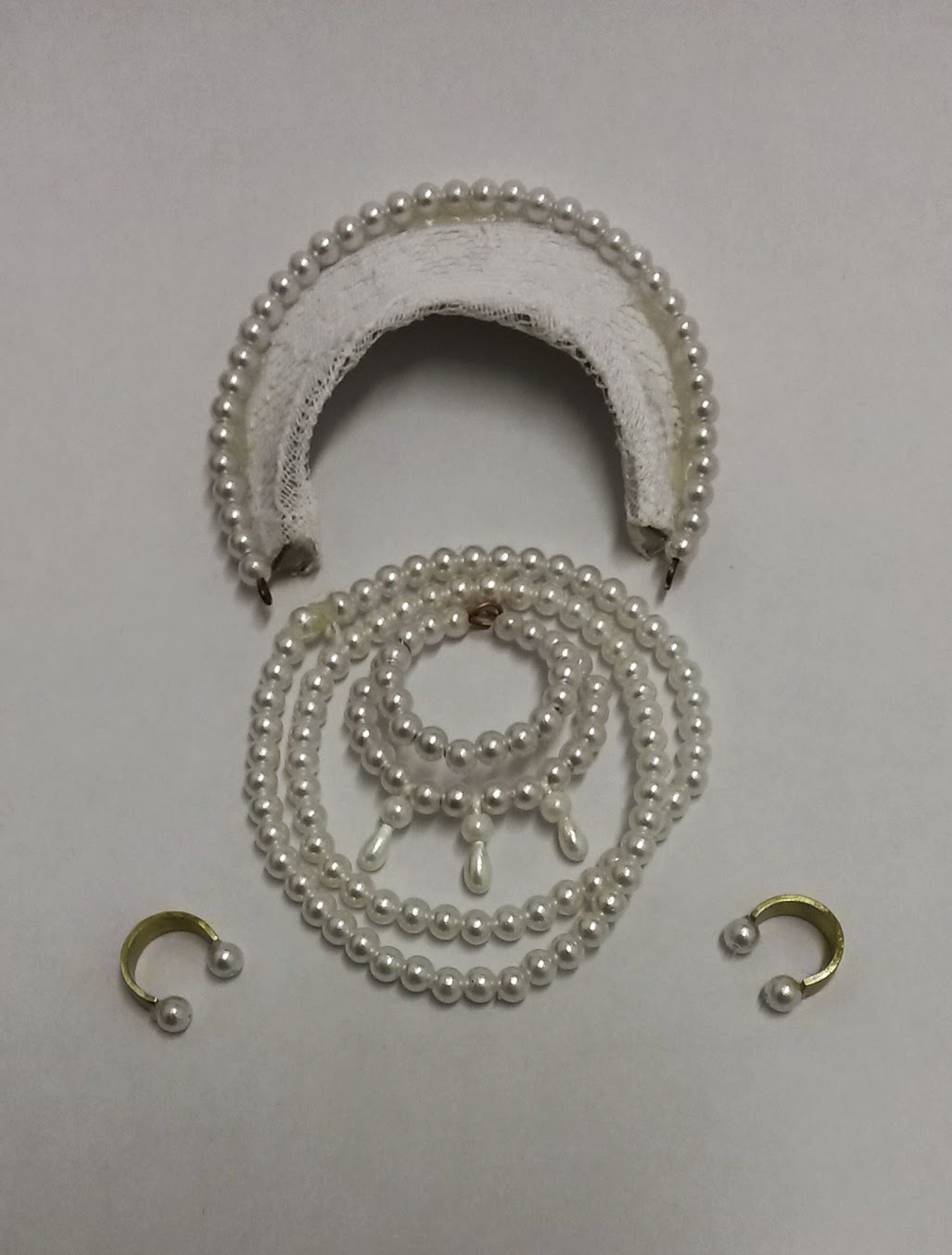
A set of period jewellery of exceptional historic and regional significance is this parure of pearls. The very obvious Ruskian design made it easy to identify from contemporary documentation as belonging to the Imperial Family of Ruskiana. It will be returned to Grand Duchess Xenia, the pretender to the Ruskian throne on behalf of and in trust of the people of Ruskiana. We hope that the government of Ruskiana will allow us to see these worn and not to just let them languish in a museum as seems to be the fate of some of the other pieces in our list. 

The Champagne State Diadem was a shock to find amongst the many pieces in the Reichenthal Vault. The reason being that history has presumed this particular piece to have been destroyed along with many other jewels in the Franconian Revolution more than 200 years ago. We will discuss the mystery along with another piece of Franconian Crown Jewels also found in the vault a little further down the list. 

Steel, diamonds and rubies make up this very unusual but elaborately designed diadem. The choice of steel is what identified this tiara as only one such example was ever made and was in itself a very unique choice of material for a ladies tiara. The Consort's Diadem of Fulco D'Este was also presumed lost in the Great War. Along with the Steel Crown of Fulco D' Este it was made from steel taken from a canon that is said to have tipped the war of independence in the favour of the Royalists. The Crown and now reunited with its matching Consort's Diadem is considered more of a symbol of the nations independence than of the monarchy per se'.  
The solid gold Consort's Diadem of  the Noble House Von Thurn und Taxis had some documents connecting it to its history and owners with it in the chest. This was a very valuable find as no records or memory of its existence was known historically. We can thus assume that it was made in Reichenthal and due to unforeseen circumstances was never sent to those who ordered it, presumably due to the 1996 Revolution. 

The grandest and most historic piece of the Franconian Crown Jewels has also come to light alongside the aforementioned Champagne Diadem. These miraculous finds pose some serious challenges to the continuity of Franconian history as far as the final end of their Royal jewels are concerned. It was long held that almost everything was either deliberately melted down and sold or was lost to looting. however these two spectacular finds prove that assumption false. How they stayed hidden for two centuries and ended up in Reichenthal adds to the mystery. It seems far more research may be required but for now it will remain an enigma. the jewellery at least was so famous in their time that they are easily identified and may return to the legal descendants of their former owners. 

The medieval Crown of Cataljone once graced the head of the independant Prince of Cataljone until the Principality eventually fell to its powerful neighbour, Hispania, in 1589. The Crown since then was used as the symbol for the heir to the Hispanian throne along with the title Prince of Cataljone. The Crown was thought lost during the 1996 Revolution but records now prove that it was in Reichenthal for routine maintenance and repair and obviously was spared for the same reason as every other treasure relegated to the secret vault. 

Another historic artifact from Hispania is the Sword of the Lionheart which was with the Crown of Cataljone in the same chest. This is the official coronation sword of Hispania and the people of Hispania are said to be elated due to its recovery. 

The Nuptial Coronet of Scotney is a very sentimental and historic piece of jewellery as it has been used for over 100 years in the marriage ceremonies of all Scotney Princesses. It to was in Reichenthal for routine maintenance at the time of the 96 revolution and found its way into the vault. It seems the foresight of the then King of Reichenthal and his jewellers are to be commended. 

The most intrinsically valuable yet not the most historically old piece of jewellery is still a national symbol and had Princess Augusta aghast when she opened the chest. The Crown of the former Kingdom Romagna was according to tradition smuggled out of the country during the Great War. It was originally made to replace the old medieval crown that was destroyed in a fire in the Royal palace in 1802. The Crown according to the smuggling rumour plainly went missing and was never seen again until now. Perhaps the Reichenthal rulers had an unspoken agreement with most Royal families to do whatever they could in time of need to save historic pieces whenever possible. This Crown will return to Romagna and fall in the custody of Princess Donatella, Duchess DiGiorgio, as keeper of Royal treasures on behalf of that nation. 

The greatest find and also most politically volatile set of jewellery is also the oldest set of Crown Jewels in Europa. Historically, the set was created to symbolize Serbieski independence after centuries of war and since then has also caused wars. Over time it has reached a status of veritable holy relic in the eyes of the people who's identity and independence it symbolizes. Made in 1250 the Crown Jewels of Serbieski is an awesome find for its historic value but politically pose a conundrum. Their return to Serbieski has the potential to incite civil unrest and an emergency meeting of the government of Syldavia that rules over the now province of Serbieski has been called. The Grand Duke of Serbieski is the legal owner of the jewels placing him under severe pressure as he is asked to not bring the Crown jewels back to their homeland until consensus is reached as to their fate. Internet chat sites are reporting massive feeds of information surrounding the discovery of the jewels predominantly calling for their return and public display on Serbieski soil. Armed forces in Syldavia have been put on "discreet" alert and governments in greater Europa have called for calm and reason to permeate the Serbieski stance.

We conclude today's post with The Duke of  Swann's statement to the press in connection with Serbieski Crown jewels:
" We hope that the joy of finding this huge treasure will foster an overriding attitude of thanksgiving in the whole of Europa and Serbieski in particular. May it usher in a new era of hope for a prosperous future set on a foundation of unity. If Reichenthal could risk the necessary sacrifices to preserve these treasures from the destruction of war, let us honour that sentiment by preserving them and our futures with the same self sacrifice."  

Wednesday, 13 August 2014

"To be or not to be" Thursday (Imperial and Royal Families 4 The House of Romanov)

Currently there are no countries that are active Empires but two accepted Imperial Dynasties in pretense in Europa. Today we will discuss the Imperial House of Romanov that claims the throne of the former Empire of Ruskiana, ousted in the Great War around 100 years ago. 

The Imperial Crest of the House of Romanov that ruled over Ruskiana for just over 300 years is pictured above.

At its apex this Imperial Dynasty was the wealthiest, most prestigious and most influential in the world. Not withstanding the very large family was also dynastically linked to all the others in Europa through marriage. The irony is that very few members of this most illustrious dynasty are left today  as almost all were killed in the revolution that followed the Great War.

The head of this Imperial Family and pretender to the Ruskian throne is Her Imperial Highness Grand Duchess Xenia Alexandrovna Romanov. Her family who lived in exile in the Empire of Scot-Britania were almost all  murdered during the 96 Revolution. Earmarked as foreign freeloaders they were earmarked by revolutionaries but fortunately the Grand Duchess and her young sister escaped. Her great grandfather was the last true Emperor or rather Tzar of Ruskiana. Grand Duchess Xenia remains unmarried. 

Grand Duchess Xenia has a sister with whom she used to be very close. However a dispute over her sister marrying outside of the House Laws of Succession led to them becoming estranged. Grand Duchess Alexandra was last seen officially at a Royal event in 2009. representing her family at the wedding of Infanta Isabella of Hispania. Grand Duchess Alexandra is purportedly living in South Americania. 

Grand Duchess Xenia's mother is the sister of the current Grand Duke of Hanoveria's father and as such he and his sisters, Queen Maxima and Princess Kirsten Youssopoff  are her first cousins. This does not make the Hanoverians part of the Romanov Dynasty however. A twist of marriage however did make Princess Kirsten an extended member. The photo above shows the Grand Duke of Hanoveria in the center standing in between his mother in green and his wife. Queen Maxima is in dark pink next to her husband King Nikolas of Syldavia. In light pink is Princess Kirsten next to her husband Prince Felix Youssopoff.


Princess Kirsten is married to Prince Felix Youssoupoff . He is an extended member of the Romanov Family. The Prince is the second cousin in the Romanov line to Grand Duchess Xenia Alexandrovna due to his grandmother being the sister of the Grand Duchess' father. There are no other close relations in the current dynasty of the Romanov Imperial Family. 

Tuesday, 1 April 2014

What's Up Wednesday (Youssopoff Jewellery Auction)

Last weekend saw a glittering auction organized by Princess Kirsten Youssopoff in aid of Ruskiana orphanages. The Princess, a passionate defender of widows and orphans, decided to put her wealth behind supporting children who have been adversely affected by the mining in the regions surrounding the Youssopoff traditional holdings in Ruskiana. The Prince and Princess own a spectacular Sapphire Parure made from sapphires mined from the Youssopoff mines especially for Princess Kirsten in 2012. They are considered to be some of the best quality gems in the world. The Princess, who originally accepted the jewelry to market Ruskian mining and craftsmanship, decided to take it a step further two years later by auctioning the jewels off to raise funds and awareness towards the plight of orphans.

The Princely couple was enthusiastically supported by the local mining community and the red carpet event went off with a bang last week Saturday evening seeing many of the world's big business tycoons joining the Royal couple. 

The Youssopoff Palace Ball Room was the venue chosen to host the glittering soiret. 

The arrival of the stylish couple proved once again that wealth and charity can make for a spectacular collaboration.

The uncontested star of the evening was the Youssopoff Sapphire Parure to which the Ruskian Mining Corporation added a brand new pair of earrings as their contribution to the fund raiser. The set of sapphires eventually sold after a 20 minute bidding war to a wealthy philanthropist from Romagna who chose to remain anonymous.

Here we see Princess Kirsten in 2012 as she wore the sapphires for the only time in her life to the Investiture of the King of Syldavia. Her wearing of the jewelry to this internationally important political event thrust Ruskian mining and sapphire jewelry onto the world stage.

The Mine Magazine added to the publicity surrounding the sale of the jewels.

Tuesday, 18 February 2014

Tiaras and Trinkets on Tuesday (Crown Jewels of the World)

A list of all the existing Major Crown Jewels in the world will give all our fans a sense of the grandeur of the historic collections being preserved in the greater Europa. Our list will only focus on the main Crown Regalia and not the entire collections of each country.

The nationally symbolic Crown Jewels of Syldavia consist of a King's Crown and Queen's Crown.

The Kingdom or Normandia only has a Crown for the monarch be it a King or a Queen. In the case of a King, his wife would wear the Queen Consort's Tiara.

Hispania also only employs a single Crown as the preeminent part of its historic Crown Jewels.

The Principality of Swann has a Crown, Orb and Scepter as its Royal symbols.

The Principality of Wallachia has a Crown for the reigning Prince that is rarely worn. There is a smaller Crown for a Consort which is a veritable copy of the main Crown.

The Grand Duchy of Hanoveria does not place a lot of symbolic value on the concept of Crowns. A Crown does exist and is depicted on Crests and official symbols of state.

The Islands of Arcwhite do not employ symbolic Crown Jewels per sé but they do have this Medieval Headpiece that is one of the oldest diadems in all of Europa and is worn during event of high formality in Arcwhite. 

The major element of the Monagask Crown Jewels would be this almost 2000 year old golden wreath.

Fulco D'Este, although a modern democracy that has ousted its monarchy, has retained its national symbols of which this Crown is the main feature. The Crown is made of iron and is symbolic more of the people of Fulco D'Este's independence than the former monarchs.

This Crown, along with it's female counterpart is all that remains of the spectacular Ruskian Crown Jewel Collection. It is being displayed in the Ruskian capital after its rediscovery almost 70 years after it was thought lost.

The old Empire of Perlistan used this Crown as the greatest symbol of its monarchy. An Empress' Crown, Emerald Parure and a Scepter completed the official Crown Jewels Collection. 

The Electorate Grand Duchy of Reichenthal was once a Kingdom with a complete Crown Jewel Collection. The Crown of Reichenthal is all that seemingly remains of that former collection. 

There is no greater or more spectacular Crown jewel Collection than that of the United Empire of Scot-Britania. The main elements of the collection can be seen above and was saved the destruction of the 1996 Revolution through the foresight of Empress Crystobel.

Many collections like those of  Franconia and Britania faced documented destruction and some disappeared into the recesses of history. Who knows, this list may be added to in future. 

Sunday, 25 August 2013

Wonderful Weekends (Portrait of Grand Duchess Xenia Alexandrovna of Ruskiana)

Since the discovery of the Imperial Crown Jewels of Ruskiana by the Duke of Swann and their return to their homeland for permanent display in the State Treasury, there has been a lot of public interest in the monarchic history of Ruskiana. The public have shown great appreciation for the Crown Jewels Display as tickets remain sold out in advance of their release. Due to this "excitement", the Ruskiana Republic has asked the pretender to the Imperial Throne to visit the treasures in the capital and to pose in full Regalia for a portrait that would promote the history of the country and the exhibit on an international scale. Grand Duchess Xenia Alexandrovna duly agreed. Her family has not been welcome in the country since the Great War and this event sets new precedence with all exile laws being lifted.

Grand Duchess Xenia Alexandrovna of Ruskiana poses with the Imperial Crown and wearing Imperial Rubies from her own Historic Collection. She stands regally in front of the last State Portrait of her great grandfather who technically was the last Tzar of all the Ruskias. 

The grand portrait was taken in the State Treasury Museum, the old Imperial Bodyguard Barracks adjacent to the Muscovi Palace in the Ruskian Capital. 

This poignant portrait captures the link in blood with the Ruskian past and its present. We hope this event is a precursor of many good things to come as relationships become friendlier between a people and it bitter history.