Emperor Christian Victor I

Emperor Christian Victor I
Showing posts with label Romagna. Show all posts

Tuesday, 9 September 2014

What's Up Wednesday (Reichenthal returns Historic Treasures to their rightful owners.)

The content of jewellery found in the secret Reichenhal vault was listed and described in a previous post on one of our Tiaras and Trinkets on Tuesday. For those details follow this link:

http://daniel-s-world.blogspot.com/2014/08/tiaras-and-trinkets-on-tuesday.html

Since the full disclosure and probe into the case and history of the discovery, the Grand Duke of Reichenthal has begun officially returning the historic pieces to their "rightful"owners. Where appropriate, some pieces have been afforded ceremony in keeping with their symbolic value. In other case they were merely delivered to those who rightfully claim them Some pieces however ended up having no contemporary link and as such have been placed in regional museums as close to their historic ties as possible. Today's post will document the most important of these returns.

The first and one of the most historically significant pieces to be sent home was the Imperial Throne of Scot-Britania. It coincided beautifully and seamlessly with the Crown Prince Imperial's official taking up residency in the Scot-Britanian Isles. The Syldavian Ministry of Foreign affairs was happy that the events surrounding the throne's return only strengthened the bonds between the three countries of Syldavia, Scotney and Britania. The throne was returned to its own official home, the Cathedral of the Lion Heart.

The Nuptial Coronet of Scotney went with the Imperial throne and was received by the Crown Prince Imperial to again become a part of the vast Imperial Crown Jewel Collection.

Next on the list of historically important pieces to be returned was the Sword of the Lion Heart and the Crown of Cataljone, belonging to the Crown Jewels of Hispania.

The Princess of Cataljone , heir to the Kingdom of Hispania(pictured above) flew to Reichenthal to receive the sword officially on behalf of the nation of Hispania. A small hand-over ceremony was held in Reichenthal Castle.

Grand Duke Lothair personally handed the medieval sword over to the Princess.

The Crown of Catajone was still undergoing some repairs at the time of the hand-over ceremony but did fly back with the Princess of Cataljone to Hispania the next day to find its place once more alongside the other Crown Jewels of Hispania.

The Crown of Romagna, considered to be the single most intrinsically valuable piece to have been found in the Reichenthal vault was secretly sent by to the Princess Donatella, Duchess Di Giorgio by armoured car.

The Crown of the former Kingdom of Romagna is back home photographed next to the pretender to the same Kingdom. The Duchess Di Giorgio, like so many other pretenders have found themselves welcomed back to their native countries of late in order to become ceremonial custodians of those countries' Royal history.

The very beautiful Crown of Romagna will be exhibited in a new display especially being designed for it in the former Royal palace of Romagna.

The Arch Duke of Fulco D'Este is set to release a State Portrait of his wife wearing the restored Consort Diadem. It was also sent by armoured car to the Democratic Republic of Fulco DÉste where it was received by the Minister of the Interior. The Diadem will be kept in the same vault as the Steel Crown of Fulco D'Este but will be used for the first time in the official portrait and may be used in future for State Events.

The very unusual Dodecahedron Statue found in the Reichenthal Vault has received no media coverage as yet but is to feature in State Portrait of the Duke of Swann to be released somewhere in the near future.

 The Enlightened Manuscript featuring a Scripture from the Book of Romans has also been returned to Duke's Court Palace  in the Principality of Swann. the Duke of Swann is seen above standing next to the Medieval manuscript said to have been created at the request of the first Duke of Swann upon his investiture. The current Duke said that this piece is very dear to his heart for its symbolic meaning.


The greatest and also most politically volatile set of jewellery is also the oldest and posed the most problems in their return to their homeland. Made in 1250 the Crown Jewels of Serbieski is an awesome find for its historic value but politically pose a conundrum. Their return to Serbieski has the potential to incite civil unrest due to their almost relic-like status. The Grand Duke of Serbieski is the legal owner of the jewels which by tradition is the personal property of the ruler of Serbieski. Diplomatic negotiations and high security surrounded their return and to afford them the proper respect a full State Ceremony of their hand over was held in Reichethal castle attended by the King of Syldavia.  

The Grand Duke of Reichenthal (at left) gathers with his Serbieski counterpart (at right)for the hand over ceremony. The official event is legally witnessed by Princess Augusta as history expert and overseen by the King of Syldavia.

The beautiful and very old Crown Jewels of Serbieski, include the Crown, Scepter and the Demi Parure of the "Queens" of Serbieski.

The Grand Duke of Reichenthal made a poignant speech explaining the value and controversy surrounding the jewels:


"When the historic find of Royal Jewellery was discovered here in Reichenthal my family and I were as surprised and indeed amazed as the rest of the world. To have grown up, unaware of the treasure literally hidden on the other side of a mere brick wall seems very surreal. Yet now, the Imperial throne, historic jewellery and art and the controversial Crown Jewels of Serbieski have been found. The symbolic nature of these far outweighs their monetary value and the return of these relics to their proper context in this new millennium is our greatest concern.

Today we as apparently secret Reichenthalian custodians of these treasures until now are humbled to present to the great people of Serbieski with their Crown Jewels. We are keenly aware and sensitive to the controversy posed by these “national symbols” and their potential affect on the people they represent. We all as Syldavian citizens have to foster a broader perspective however. Where these symbols represent the past and the very proud accomplishment of a regional people these symbols may also hold the keys to a bigger and more prosperous future. It is that key with the potential to unlock a future which concerns us here and now. Serbieski, our proud and strong neighbours and Syldavian compatriots, today you stand at the brink of a decision. Though lost, the crown jewels, glorious symbols of unity, strength, solidarity and your place in Europa has tied you together as a people for centuries. Throughout a very difficult history that lead us to today you continued to exist, indeed continued to make your mark as a proud nation albeit like Reichenthal your neighbours, making sacrifices to continue to do so.
We share your sentiment; Reichenthal like Serbieski is a proud, fruitful, strong people. The sacrifices made were not easy. By laying down our independence, we thought all was lost. But in actual fact: more was gained. Today we are more than the small, unknown “Kingdom” we used to be. Our unique identity, Regional solidarity and our dignity have been preserved within our new Syldavian electorate. We continue in our traditions as we have done for centuries. You as honoured member of this new electorate have come to see the same benefits over the last two years. People of Serbieski, the choice is yours. We're all aware that the return of the Serbieski Crown Jewels stirs deep emotions that may tilt the scales towards an even more prosperous and stable future or one where clandestine opportunists incite revolt against it.
Therefore place this crown and sceptre on your secured freedom established on righteousness. Place it on the altar of sacrifice and continue to sacrifice for the greater good of yourselves, Syldavia and indeed all Europa. May your children and grandchildren look back to this historic day, and say: The day our crown jewels returned, was the day when Serbieski chose peace and freedom, but above all, LIFE."


The official transfer of the jewels was sealed with a handshake as the footage of the event was published live on television and the internet.

The Grand Duke of Serbieski posed for an official photo opp with the jewels in a kind of State Portrait pose.

The Serbieski Crown Jewels handover made international news and the world sighed a breath of relief as another potential local unrest was avoided in the south of Syldavia. We wish the people of Serbieski all the best.

Tiaras and Trinkets on Tuesday (Jewellery worn by Princess Donatella, the Duchess DiGiorgio)

The pretender to the throne of the Kingdom of Romagna is the beautiful and stylish Princess Donatella, Duchess Di Giorgio. Growing up in complete ignorance of her Royal heritage it must have come as a shock to her when, with the weight of the title of Princess on her mind, her eyes fell on the inheritance left to her in a Switzer Bank safety deposit box. The current collection of historic jewels however is vastly diminished from the days of the Romagna Kingdom before the Great War. What is left is essentially the private jewels that belonged to Princess Donatella's grandmaother.

For this official portrait taken in 2012 the Duchess Di Giorgio opted to combine elements of the two major sets of jewellery in the DiGiorgio Royal Collection. This was essentially her first public appearance and for that purpose she wanted to reflect, not just her own style and individuality but more so the historic roots of her and her Royal heritage. 

The Di Giorgio Diamond Parure may be considered as the central feature of the collection of jewels thus far worn by the Princess. The Parure is of exceptional quality and value and fit for a queen as it was designed for one. Originally worn by Princess Donatella's great grandmother, it may be considered a type of Queen Consort's Crown due to its imposing presence especially combined with the large necklace and the rest of the set. 

The Queen Elena Imperial Topaz Demi Parure is set with Topazes of a rich pink hue referred to as Imperial Topaz. The set was made as a wedding gift for Princess Donatella's  grandmother, the last Queen of Romagna. It consists of a brooch, earrings, an A-symmetric necklace and a strand of pearls. 

The Corvi Cameo Tiara was originally a full parure of which now only the tiara remains after the rest was lost during the Great War. The Cameos originally belonged to the Counts Corvi who in the early 1800's married off one of their daughters into the Royal Family of Romagna. 

Today the Corvi Tiara has been worn with pride due to its strong cultural links to Romagna in this pseudo State Portrait taken of Princess Donatella last year. It was paired with parts of the Diamond Parure. 

The Corvi Tiara and the pearls strand from Queen Elena's Topaz collection also made their appearance at the wedding of Princess Marie-Elizabeth where Princess Donatella acted as bride's maid. 

Many of the Romagna Royal jewels have been lost and may never be recovered but one more small tiara of exceptional design is left in the collection. Princess Donatella wore it for the first time a few weeks ago in Perlistan as can be seen above. the tiara is so delicate that a close-up view is required to truly appreciate it. 

The Art Nouveau Bandeau was made from Gold Diamonds and Platinum in 1917 for the 18th birthday of Princess Donatella's grandmother when she was still an unwed Youssopoff Princess. The tiara is a testament to a lost era and craftsmanship and as such of immense historic and artistic value. 

To see this lady of style, heritage and beauty come down the red carpet is an awesome sight and for the public to enjoy the visual appeal of the jewels is not just pretty but also a cultural and historic privilege. 

Tuesday, 19 August 2014

Tiaras and Trinkets on Tuesday (The Reichenthal Vault Cache of Royal Jewels)

The Reichenthal discovery of historic treasures walled up in a secret room has been the talk now in the news media for the last two months. Today's post will feature a list of all the historic jewellery pieces found hidden, probably to save it from destruction, amongst other artifacts. Princess Augusta, the world renowned historic jewellery dealer, was tasked with the massive responsibility of documenting, appraising and verifying the provenance and by extention, the ownership of the jewellery pieces found in the Reichenthal secret vault.

Here we see the Princess as she was photographed, still inside the vault with the large chests containing only the Royal jewellery left there for posterity. 

One of the chests was found inside the vault left open with jewellery and gold bullion spilling from it as if it was hastily dropped there many decades ago. 

Let us now run down the list of every single piece of jewellery for documentation sake and to appreciate the new archive photos taken of these exceptional pieces of history.

As seen in the photo of the open chest, this open circlet crown is now known to belong to the Crown Jewel Collection of Reichenthal. It has been documented in historic paintings and photographs but hasn't been seen for almost 20 years since the 1996 Revolution. It is known as the Queen Consort Crown of Reichenthal and was made from gold and amethysts in the early 1500's

This solid gold diadem set with diamonds and an amethyst was made to resemble the style of the Queen Consort of Reichenthal's Crown in 1888 for the then wife of the Crown Prince. Today it would be appropriate for the Crown Princess Delrese to wear it. 

Two Reichenthal style gold tiaras are confirmed to not be part of a documented list of the Reichenthal Crown jewels but are presumed to be from the collection of the controversial Germanic Imperial Family. Two tiaras are vaguely described in a list of " possesions"  of the Empress to have been sent out of the country during the Great War only to dissappear forever but there is no archival evidence otherwise. The description matches these but is not conclusive proof. As such they belong to the current Syldavian State and will probably end up in the National History Museum. 

This platinum and diamond tiara of very fine craftmanship has also failed to produce verifiable provenance. 

This art deco style tiara of exceptional craftsmanship is made from gold and set with rubies and diamonds. No documentation or other historicity for it has come to light and it too may find its home in a museum. 

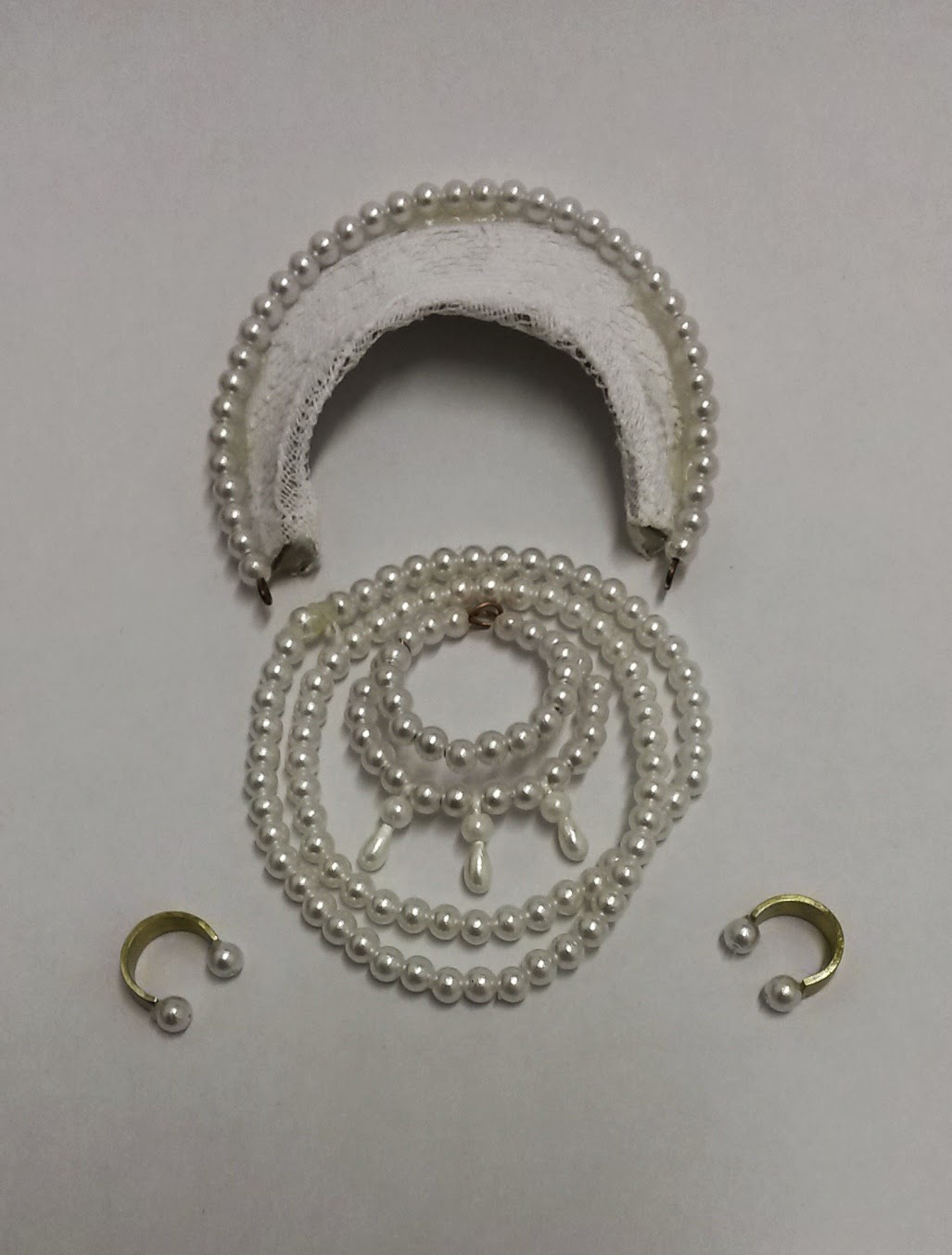
A set of period jewellery of exceptional historic and regional significance is this parure of pearls. The very obvious Ruskian design made it easy to identify from contemporary documentation as belonging to the Imperial Family of Ruskiana. It will be returned to Grand Duchess Xenia, the pretender to the Ruskian throne on behalf of and in trust of the people of Ruskiana. We hope that the government of Ruskiana will allow us to see these worn and not to just let them languish in a museum as seems to be the fate of some of the other pieces in our list. 

The Champagne State Diadem was a shock to find amongst the many pieces in the Reichenthal Vault. The reason being that history has presumed this particular piece to have been destroyed along with many other jewels in the Franconian Revolution more than 200 years ago. We will discuss the mystery along with another piece of Franconian Crown Jewels also found in the vault a little further down the list. 

Steel, diamonds and rubies make up this very unusual but elaborately designed diadem. The choice of steel is what identified this tiara as only one such example was ever made and was in itself a very unique choice of material for a ladies tiara. The Consort's Diadem of Fulco D'Este was also presumed lost in the Great War. Along with the Steel Crown of Fulco D' Este it was made from steel taken from a canon that is said to have tipped the war of independence in the favour of the Royalists. The Crown and now reunited with its matching Consort's Diadem is considered more of a symbol of the nations independence than of the monarchy per se'.  
The solid gold Consort's Diadem of  the Noble House Von Thurn und Taxis had some documents connecting it to its history and owners with it in the chest. This was a very valuable find as no records or memory of its existence was known historically. We can thus assume that it was made in Reichenthal and due to unforeseen circumstances was never sent to those who ordered it, presumably due to the 1996 Revolution. 

The grandest and most historic piece of the Franconian Crown Jewels has also come to light alongside the aforementioned Champagne Diadem. These miraculous finds pose some serious challenges to the continuity of Franconian history as far as the final end of their Royal jewels are concerned. It was long held that almost everything was either deliberately melted down and sold or was lost to looting. however these two spectacular finds prove that assumption false. How they stayed hidden for two centuries and ended up in Reichenthal adds to the mystery. It seems far more research may be required but for now it will remain an enigma. the jewellery at least was so famous in their time that they are easily identified and may return to the legal descendants of their former owners. 

The medieval Crown of Cataljone once graced the head of the independant Prince of Cataljone until the Principality eventually fell to its powerful neighbour, Hispania, in 1589. The Crown since then was used as the symbol for the heir to the Hispanian throne along with the title Prince of Cataljone. The Crown was thought lost during the 1996 Revolution but records now prove that it was in Reichenthal for routine maintenance and repair and obviously was spared for the same reason as every other treasure relegated to the secret vault. 

Another historic artifact from Hispania is the Sword of the Lionheart which was with the Crown of Cataljone in the same chest. This is the official coronation sword of Hispania and the people of Hispania are said to be elated due to its recovery. 

The Nuptial Coronet of Scotney is a very sentimental and historic piece of jewellery as it has been used for over 100 years in the marriage ceremonies of all Scotney Princesses. It to was in Reichenthal for routine maintenance at the time of the 96 revolution and found its way into the vault. It seems the foresight of the then King of Reichenthal and his jewellers are to be commended. 

The most intrinsically valuable yet not the most historically old piece of jewellery is still a national symbol and had Princess Augusta aghast when she opened the chest. The Crown of the former Kingdom Romagna was according to tradition smuggled out of the country during the Great War. It was originally made to replace the old medieval crown that was destroyed in a fire in the Royal palace in 1802. The Crown according to the smuggling rumour plainly went missing and was never seen again until now. Perhaps the Reichenthal rulers had an unspoken agreement with most Royal families to do whatever they could in time of need to save historic pieces whenever possible. This Crown will return to Romagna and fall in the custody of Princess Donatella, Duchess DiGiorgio, as keeper of Royal treasures on behalf of that nation. 

The greatest find and also most politically volatile set of jewellery is also the oldest set of Crown Jewels in Europa. Historically, the set was created to symbolize Serbieski independence after centuries of war and since then has also caused wars. Over time it has reached a status of veritable holy relic in the eyes of the people who's identity and independence it symbolizes. Made in 1250 the Crown Jewels of Serbieski is an awesome find for its historic value but politically pose a conundrum. Their return to Serbieski has the potential to incite civil unrest and an emergency meeting of the government of Syldavia that rules over the now province of Serbieski has been called. The Grand Duke of Serbieski is the legal owner of the jewels placing him under severe pressure as he is asked to not bring the Crown jewels back to their homeland until consensus is reached as to their fate. Internet chat sites are reporting massive feeds of information surrounding the discovery of the jewels predominantly calling for their return and public display on Serbieski soil. Armed forces in Syldavia have been put on "discreet" alert and governments in greater Europa have called for calm and reason to permeate the Serbieski stance.

We conclude today's post with The Duke of  Swann's statement to the press in connection with Serbieski Crown jewels:
" We hope that the joy of finding this huge treasure will foster an overriding attitude of thanksgiving in the whole of Europa and Serbieski in particular. May it usher in a new era of hope for a prosperous future set on a foundation of unity. If Reichenthal could risk the necessary sacrifices to preserve these treasures from the destruction of war, let us honour that sentiment by preserving them and our futures with the same self sacrifice."  

Saturday, 30 November 2013

Wonderful Weekends (Official Portrait of Princess Donatella, the Duchess DiGiorgio)

Princess Donatella of Romagna has followed like many other pretenders this year in releasing an official portrait. These portraits all follow the current wave of Royal popularity, linking the historic past with the contemporary Renaissance.

Here we see Her Royal Highness sporting historic jewels, Royal Crest and is photographed with the Throne of Romagna. The portrait was taken in the DiGiorgio Palace Museum in Romagna by special permission. 

The Princess wears the Corvi Cameo Tiara inherited from her Corvi Committal ancestors along with Romagnian Royal Diamonds. 

Sunday, 17 February 2013

Memory Monday (Revolution and War)


The only constant in the universe is change. It is inevitable that things adapt, change and grow and so do nations and countries along with the political systems they employ. History is filled with stories of great Kingdoms and vicious wars that shaped the world we know. For our history lesson today we want to flesh out more of this story that forms the backdrop of our current Royal Families. 

The Franconian Revolution 1734 

The first Kingdom to abolish their monarchy was Franconia in 1734. They had an internal revolution that ousted the King due to economic strain and inequality in the government system. The new Republic of Franconia that emerged over a few decades from the ruins of the "Old Regime" consists today of 3 semi autonomous states that fall within the greater country. The 3 states are the Free Province of Champagne, the Bishopric of Andor and finally, Greater Franconia. Within the borders of Greater Franconia we also find the 1996 addition to the republic of the formerly independent Principality of Monagask. 

Historians are divided on the causes and the justifications for this revolution. Historic fact is blurred by contradicting accounts and even blatant deception that was rife within the chaotic first few weeks. Wholesale slaughter characterised this initial anarchistic period of execution but ironically was exactly what gave the revolution the momentum to permanently change the course of the country. The popular historic view claims, in generalised terms that the monarchy of Franconia had grown greedy and excessive but also technically useless. The populous was starving, the military was losing wars and the ruling class was having parties paid for by exorbitant taxes. This summary has some basis in fact but the bigger truth is that lots of it was just propaganda and insidious gossip designed to incite the masses and to justify to the rest of the world, what was about to happen. Conversely, the less popular Royalist perspective questions these romanticised "facts". The King was kept impotent in a gilded cage by bureaucracy and misinformation, the army was forwarding political expansion on the behest of government policy, not the King's private whims and the state op the nation was more often than not kept entirely from the King's knowledge by deliberately diverting his attentions to protocol laden commitments at court. This seemingly designed tension then finally exploded into the infamous "Period of Execution" where after a few weeks even the initial leaders of the revolution found themselves being slaughtered.

A contemporary painting of the last Queen of Franconia. Dressed sumptuously in full court apparel with small coronet on top of the very fashionable hairstyle of the day.

The replica of the infamous Guillotine in the Bastion Prison Museum in Pariseum. An army of these instruments of execution by decapitation took the lives of thousands during the revolution. They were specifically designed for efficiency, not just in the act of execution but also in the processing of as many of the convicted as possible. The guillotine became the symbol of the bloodbath that was know as the "Period of Execution" and meant to also inspire respect and even terror toward the emergent "New Regime".

In hindsight it can be speculated that an insidious middle class of politicians and bureaucrats were seemingly working behind the scenes and are thus more to blame for the Franconian Revolution. They set the two dogs of commoner and aristocrat against each other and waited to side with the winner. Regardless of historic fact and assumption, the monarchy fell, never to be restored and after almost a century of recovery, Franconia became the Europan bastion of  the republic ideal. This initial revolution now set a precedence for future abolishments of monarchies, not through dynastic shifts or war but purely trough forcing the will of the people.

Some descendants of the Franconian aristocracy survive to this day but in a spirit of modern equality, do not flaunt the fact. Many, like the baronial family D'Rothchild and the ducal family of Champagne are upstanding citizens with vast wealth and powerful businesses that work to forward the country's economy and assist in charitable endeavours. There has however always been the faint murmur, bewailing the bygone glory of Franconia and the splendour of the "Courts of the King". Currently Prince Louis D'Pont Du Lac III waits in the wings as pretender to a throne that might never be restored but has garnered a fair amount of popular publicity in recent years.

In this photo taken at the Roswind\D'Pont Du Lac engagement party in 2012, we see the Franconian Royal Family in pretence. From left, the d'jour King, Prince Louis D'Pont Du Lac III, then the younger brother who got engaged, Prince Valmont D'Pont Du Lac and their sister, Princess Antoinette D'Pont Du Lac.

The Germanic Empire and The Great War 1936-1949

The Germanic Empire was the pre-eminent nation of its day, rivalled only by its neighbour and nemesis, the Ruskian Empire of the East. The former Confederate Kingdom of Syldavia had declared itself an Empire in 1825 upon the 500th anniversary of its ruling dynasty and its inclusion of the then, Duchy of Fulco-D'Este into its sovereign realm. This was at that stage, preceded by an aggressive yet subtle 10year expansion through conquest and treaty that established the full extent of the Germanic Empire. At its founding, the Empire included its own semi autonomous regions of ; Reichenthal, Thurn und Taxis, Bo'hemia and Greater Syldavia and newly added the Kingdom of Hanoveria by Treaty in the north, the subjugation of  the Grand Duchy of Serbieski in the south and the virtual annexation of Fulco DÉste in the east. The Empire which was a fanciful attempt at uniting all Germanic speaking peoples under one throne was politically structured as a de facto Elected Empire but this was in reality only on paper. In theory the Empire was run by a council consisting of the monarchs of each of the aforementioned "Germanic"regions. In turn the council was chaired by an Emperor or Kaizer, elected from the ranks of monarchs to serve as Head of State and Ruler of the Empire for life. Succession was governed by election at the death of the former Emperor. The problem  started when it became clear that the election process did not allow for unbiased fairness but in principle always tipped in the favour of the most powerful member state which inevitably was always Syldavia.

The full extent of the Germanic Empire at its height before the Great War can be seen in shades of green on the map above.

This political anomaly was overlooked by the very proud citizens of the very prestigious Germanic Empire and economy and prosperity was bolstered by a sense of duty and patriotism. Only the Grand Duchy of Serbieski  had the occasional protest rally but these were decisively quelled. It was the outside world and in particular the Emperor in Ruskiana who found fault and indeed saw opportunity for expansion of his own territory if the Germanic Empire could be destabilised. Two Empires and perhaps more accurately, two egos were about to plunge the world into a desperate war, the likes of which had never been seen.

Tensions grew, Serbieski sought clandestine help from the Empire of Ruskiana in order to assert Independence and it was duely given. This interference in internal politics soured diplomatic relation between the two empires even more. An then the spark that set the powder keg off took place in Fulco DÉste. The son and heir of the Arch Duke was shot dead by what was reported to be a Serbieskian separatist while taking part in an official Royal parade. The heartbroken and shocked Royal Family and people of Fulco D'Este wanted revenge and the situation soon broke out in what we call the Great War. Two clear sides quickely manifested in The Germanic Empire allied with the Kingdom of Romagna. These Axis Powers collaborated in subjecting Serbieski and in invading the neutral Switzer Confederacy. This was followed by direct attack on Ruskiana and Wallachia. The Opposition Powers allied with Ruskiana were the Kingdoms of Scotney, Britania, Wallachia, and Hispania and the Republic of Franconia. Arcwhite, Monagask and Normandia remained neutral along with the invaded Switzer Confederacy.

Reichspantzers or Imperial Tanks scoured Europa for enemies

Due to the Germanic Empire being a Confederacy, it required a central marshal government during the war. The office of Imperial Chancellor or Reichskanselier was thus created. The post was in effect that of a Prime Minister that submitted to the emperor on paper but in effect held all the power needed to make quick executive decisions without the encumbrance of Royal protocol or bureaucratic red tape. The post was given by direct decree to the preeminent army general in the nation. General Count Otto von Bismarck was raised to the rank of field marshal and given the de facto executive power over the empire. Now the Empire was to wage its self justified war of invasion, starting with the complete subjugation of the Serbieski insurrection and the invasion of the Switzer Confederacy. The Germanic Imperial army was the most advanced and efficient force known to date but the Britannian fleet was the "Ruler of the Waves". In the air it was any body's game as flight was a new technology but Ruskiana had the power of sheer numbers. More people died in the ensuing decades than ever before in the history of man. 

The first chinks in the Germanic armour appeared when Hanoveria dissolved its allegiance with the Empire and sided with the Opposition Powers. Hanoveria, regardless of being a Germanic nation could not reconcile itself with the invasion of a sovereign state without provocation. The Grand Duke also questioned the power of the Reichskanselier which had at this stage rendered the Kaizer all but obsolete. Hanoveria's break with the Empire was met with the worst air strike attack to date. The Hanoverian Blitz as it was know killed almost one tenth of the entire populous. Next came the official invasion of Ruskiana, and Farnconia. Wallachia stood its ground as best it could but the main resistance came from Franconia who kept the enemy at bay indefinitely. The final victory came when the United State of Americania joined the Royal Opposition forces in Europa and so turned the tide. 

Count Otto von Bismarck, Riechskanselier of the Germanic Empire is seen here in dress uniform for an evening function. he committed suicide in his bunker when it became clear that the war was lost.

After the decisive victory the Empire was disbanded. Syldavia was established as a separate independent Kingdom with the Crown of Emperor being stripped from the Kaizer and the new Crown of King being given to his grandson and heir. The ex-Kaizer was then exiled. Fulco DÉste became a Republic and so did Romagna. The stigma of the war led to both nations abolishing its monarchies. Ruskiana's losses in the war and the cost to the economy was blamed on their emperor and an internal civil war and revolution lead to the abolishment of their monarchy shortly after. Serbieski was established as an independent Kingdom in its own right which was all the people of the war torn region ever wanted. Reichenthal became the world's smallest Kingdom and the Principality of Thurn und Taxis and the County Palatinate of Bohemia were mediatized within the Kingdom of Syldavia. The Count Von Bismarck was post-humously stripped of rank and his titles and estates went to his nephew who is the ancestor of the current King of Syldavia.

So ended one of the darkest hours in history and the stage was set for the next chapter.

The 1996 Revolution 1996-1998

The marriage of Queen Crystobel II of Scotney to Crown Prince Christian of Scotney was probably the biggest turning point in the entire history of Europa. It was the height of the 1980's and the entire world was abuzz with prosperity and goodwill. The Great War was long forgotten and economies across the board were showing the results of hard work and years of relative diplomatic peace. Queen Crystobel II of Scotney, was an archetype "darling" of the world media, wealthy and the Head of State of a prosperous nation steeped in history. Her new husband was the handsome heir to the wealthiest monarchy on earth and the neighbouring Kingdom of Britania. The wedding was an unprecedented and as yet unmatched media extravaganza laden with official protocol. It led, upon Prince Christian of Britania's ascension to the throne, to the establishment of a new Empire as the two countries united under one crown. What some saw as the dawn of a New Golden Age other insidious powers saw as an opportunity to exploit for personal advancement.

This photo was taken at the "Wedding of the Century" between the Queen of Scotney and the Crown Prince of  Britania in 1986.

The United Empire of  Scot-Britania was established in 1993 and set the stage for what was supposed to be an economic powerhouse and united nation unrivalled in all the world. History was to prove that the stage was actually set for a hidden powder keg underneath the raised platform of the apparently glorious aspiration.

In 1996, months of xenophobic protests, labour strikes and parliamentary debates on economic concerns and military power sharing,  led to riots breaking out in the Imperial capital. These eventually sparked a 3-sided pseudo civil war between rioting citizen, the military acting on a self declared marshal law and Imperial Guards protecting what they considered the only legal authority namely the Imperial Family. The decisive point-of-no-return, occurred when a peace amidst growing tension was reached in April 1996 over Easter. This was a step towards a permanent resolution but was in fact going to last a mere two weeks. A massive Easter Celebration was held at Roswind Castle where the Royal Families of the world gathered to pay homage to the Emperor and Empress to show international solidarity for the Empire. It was also intended to strengthen the precarious peace. To this day, what led to the following events have been left to pure speculation as no military records exist but the fact remains that two Britannia-class fighters were scrambled and fired two missile strikes each into the Castle of Roswind. The explosions and fire led to the deaths of most of the Royals and the staff attending the celebration. This dropped the entire Empire into a full revolutionary civil war, almost led to a second Europan War and by extension caused the fall of several Royal dynasties. 

The capital City of Londinium burns while Riot Police lose all control during the revolutionary civil war known to history as the 1996 Bloody Revolution. Aside from the direct attack on the Castle, Royal Palaces and other government installation became the targets of angry mobs. It is a complete miracle that the Empress escaped with her son amidst the chaos but perhaps the chaos served as the perfect smoke screen as initially no ordered plan was in place from any real side. It was only in the ensuing months that a proper military marshal law came into effect and was even able to exert a form of order. 

The ruins of Nonsuch Palace in Britania is all that's left of the Imperial Summer Palace. This palace was raided by a mob who after looting, set it on fire. It was just left in this state of increasing decay until it was declared a world heritage site in 2006 along with what is left of Roswind Castle in memory of the lives lost during the revolution.

The Bloody Revolution caused the the downfall of the United Empire of Scot-Britania and the deaths of the monarchs of Normandia, Syldavia, Monagask, Swann and Hispania. The convalescing King of Serbieski died of a heart attack after hearing of his wife's death. This led to some of those nations abolishing their own monarchies. Outside of the Empire, Syldavia was worst hit by an ensuing but short lived civil war on its own soil. After the 96 Revolution only, Hispania, Wallachia, Swann, Arcwhite and Hanoveria retained their traditional monarchies but under a very strained atmosphere. Wallachia all but totally hid their venerated monarchy from the public stage. Hispania's new Queen was a young mother kept out of the public eye in an isolated castle for fear of assasination. Swann's Duke was in a coma and eventually passed away leaving the throne to his overwhelmed teenage son. Royalty as a concept had never fallen so far from grace and power.

The Emperor, Empress and their son were believed dead and  the new democratic age settled like a pall over the world. The new millenium was to tell an entirely new story however.

Empress Crystobel as she is today, at left, at her son and heir's wedding to Odeliah Sorgenfrei in 2010. Both survivors of the revolution have re-entered the public stage. If the United Empire, or indeed the independent nations of Scotney or Britania ever considered a restoration of monarchy, the Crown Prince Imperial, Cristian Victor of the United Empire would be the man sit on any one of the three thrones. As this blog post proves, nothing is certain and anything is possible. History-in-the-making however, is always exciting.